Hords Creek Lake, located about
eight miles west of Coleman on Hords Creek,
was first surveyed in 1932, and was being
studied by Congress in 1940, with engineers
surveying the dam site in late 1943, but its
building was delayed by World War II.
It emerged as a reality in December1946,
after much red tape and work from
Congressman O. C. Fisher. The city of
Coleman was in dire need of additional water
at the time and the lake was finally placed
on a list of urgent and non-deferrable
projects submitted to the Office of War
Mobilization and Reconversion. There
was sufficient difference in elevation to
deliver water by gravity to the water
storage tanks in Coleman through a 24 inch
line which could deliver 3,580,000 gallons
per day with water surface at elevation
1833.0.
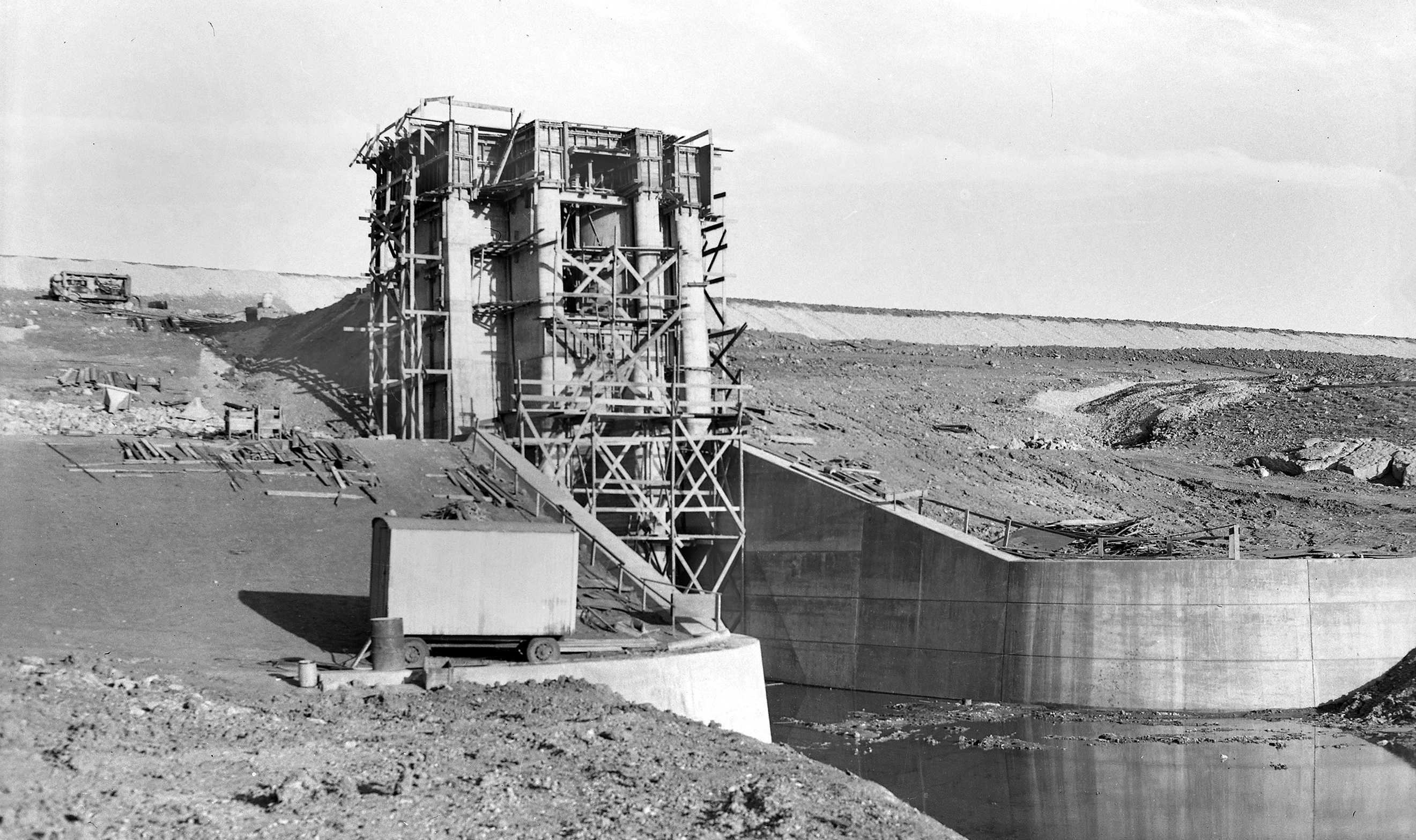
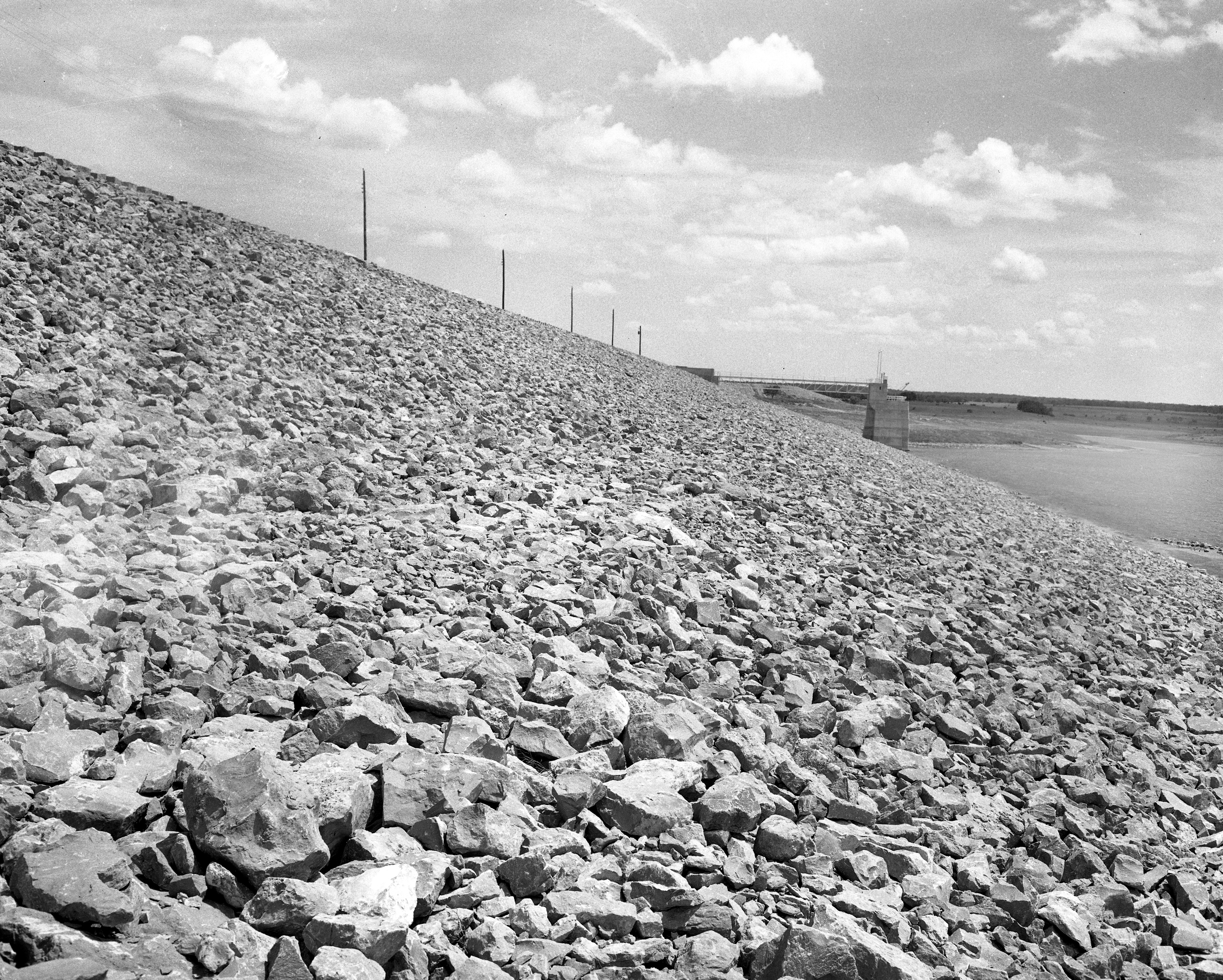
Hords Creek Lake cement work
Building of the Hords Creek Lake Dam - 1947
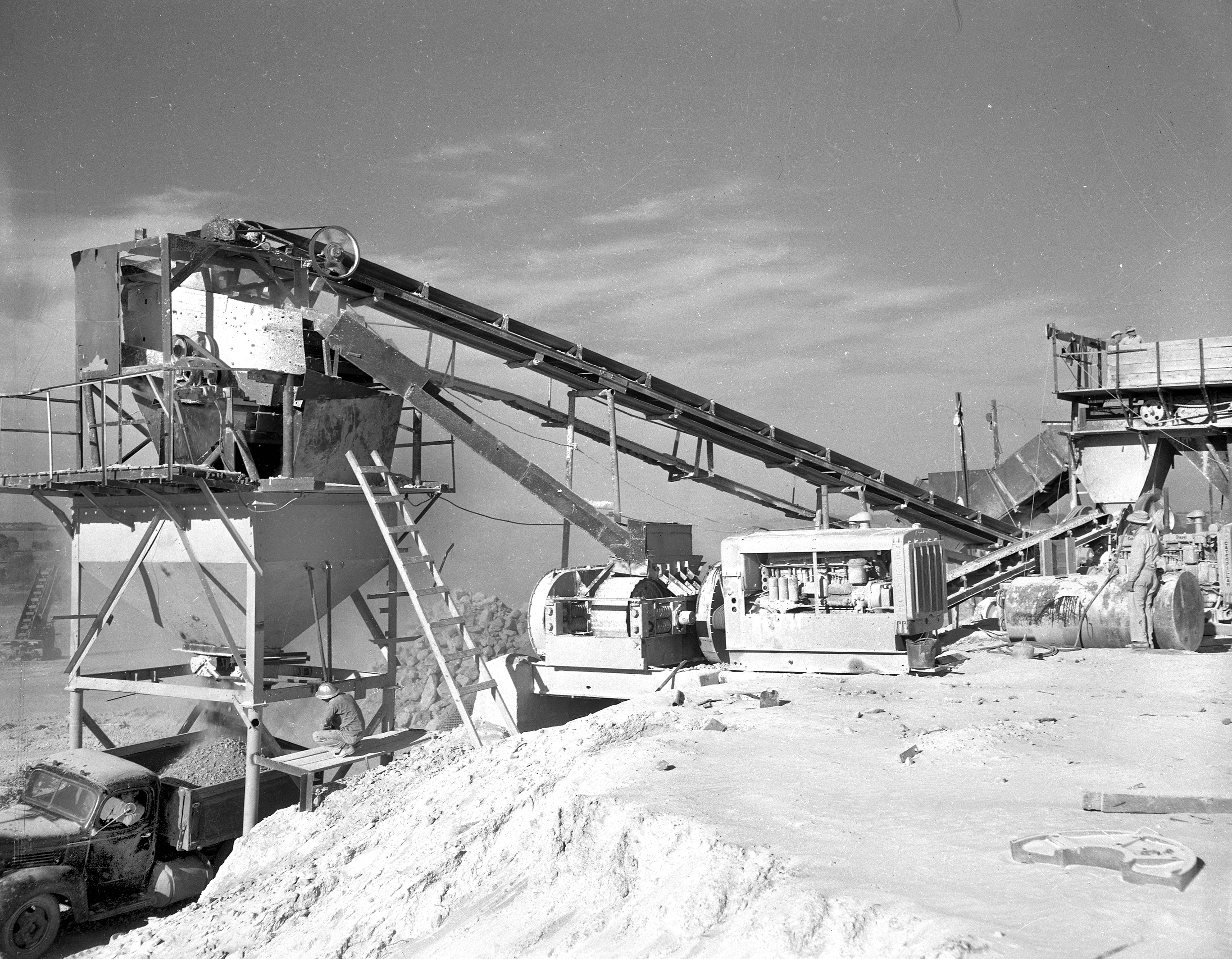
Crushing rock for the dam
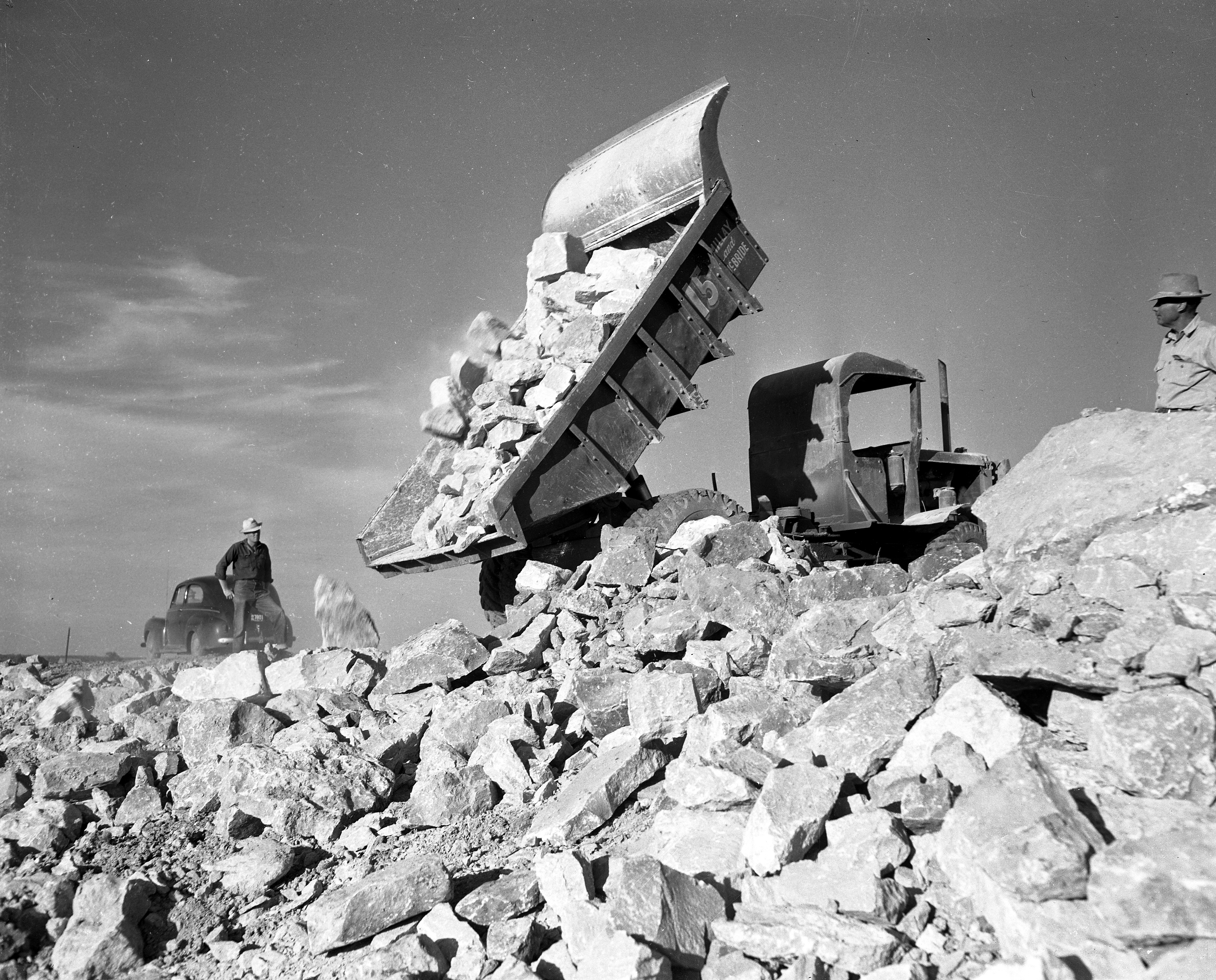
Adding rock to the dam site
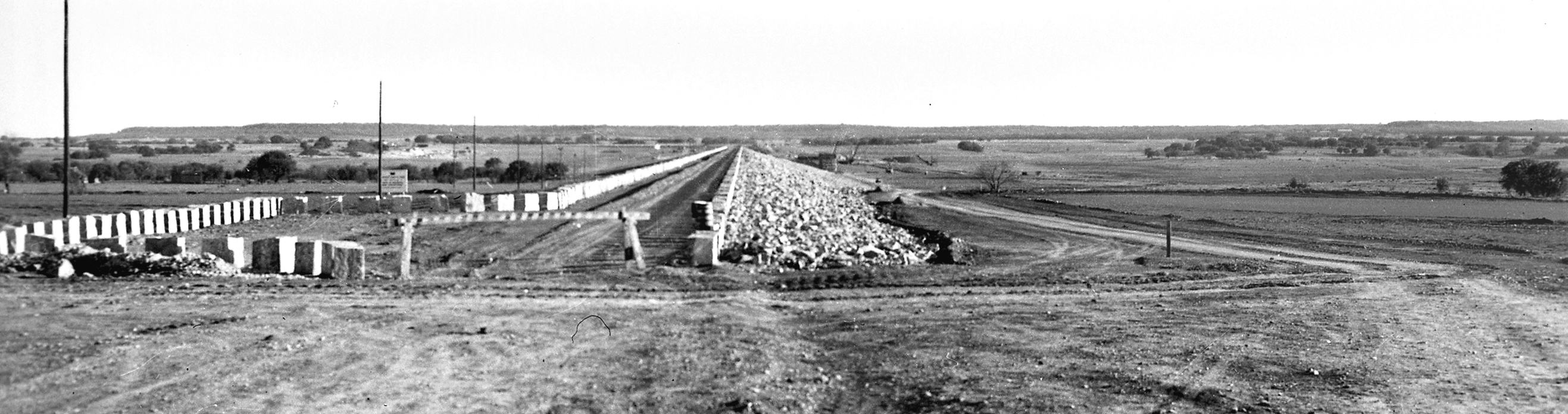
Hords Creek Lake Dam
The dam itself was a compacted
earthen fill structure about 6,300 feet long
with a maximum height of 91 feet, top width
of 24 feet and a maximum base width of 600
feet. A 16 foot roadway was provided
across the dam. The structure involved about
1,300,000 cubic yards of fill.
Appurtenant works required about 7,500 cubic
yards of concrete. There were two
reinforced concrete outlet works were
constructed, one for water supply to the
city of Coleman and the other for flood
control. Construction began on the
lake in January 1947 with the contract given
to List and Clark Construction Company of
Kansas City by the U. S. Army Corps of
Engineers, and was completed in May 1948 at
a cost of about two million dollars.
The city of Coleman paid $100,000 of its
cost. In March 1948, work was nearing
completion on the Hords Creek project.
The concrete work was well along, two large
concrete tunnels led through the dam
connection with the front of the flood
control. Rock was crushed into smaller
sizes for fill, with the dam being covered
with large rocks.
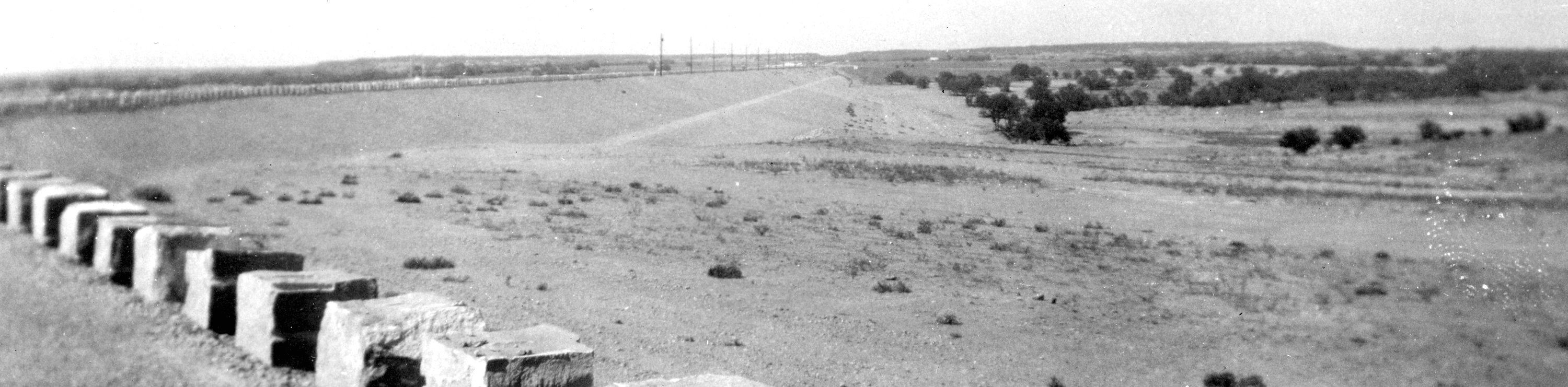
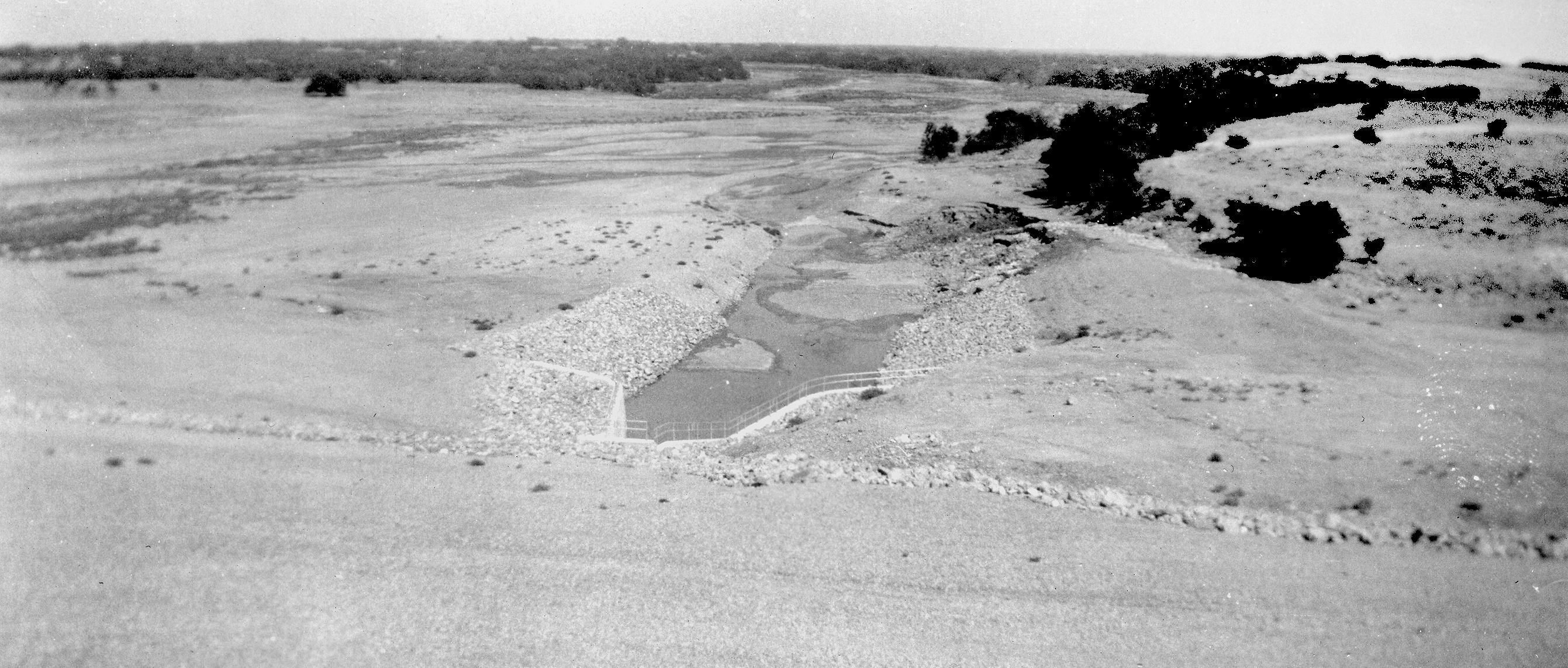
Hords Creek Lake dam, looking south
View from the top of the dam, looking west
Hords Creek Lake is shown after completion
in 1948, looking south across dam and
looking west from top of dam with a little
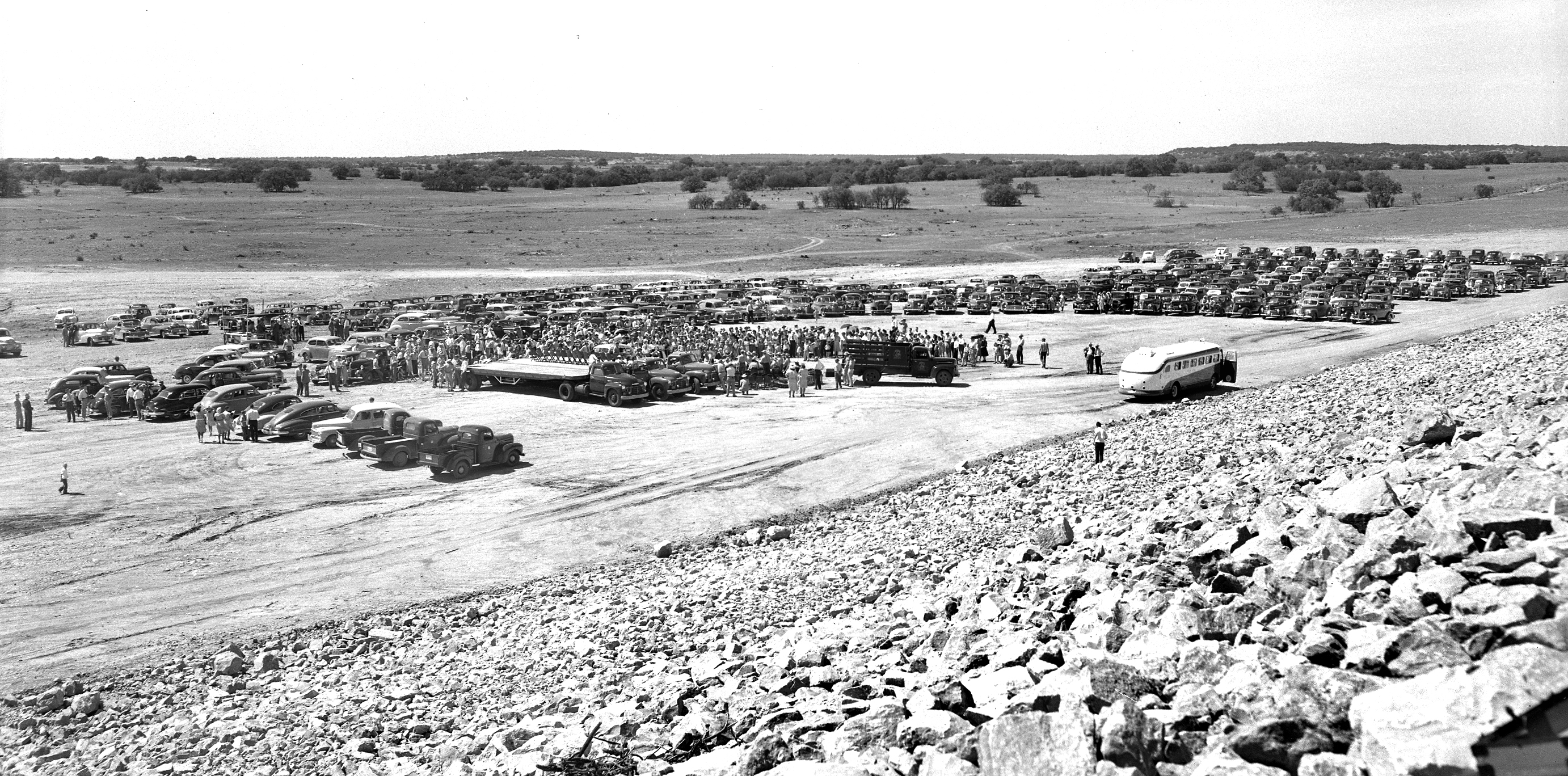
water in the bottom. A dedication for
the new lake was held in April 1948, with
car parking in the new lake bed. The
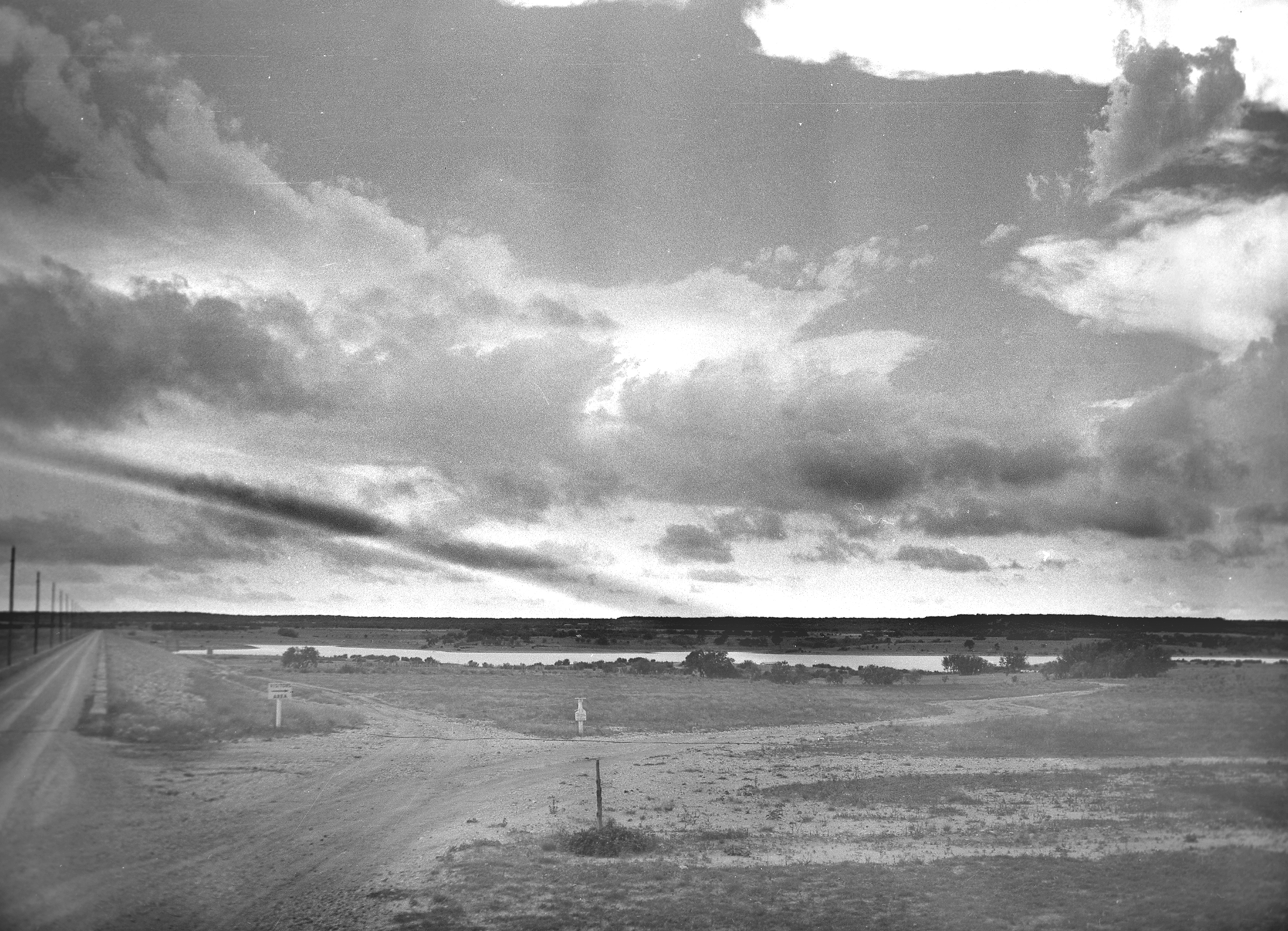
sunsets at Hords Creek Lake were
spectacular, and a full lake is always good.
Lake Dedication - April 1948
Sunset at the lake - 1949
A lake full of water - 1951
A bond election to provide funds for the
building of a filtration plant and water
supply system was held in August 1947 for
the issuance of $350,000 in taxation bonds
to finance the project. About $95,000 of the
money would be used for the construction of
a modern filtration plant adjoining a
storage supply where 750,000 gallons of
water would be kept on hand. The rest of the
funds were used in the laying of a pipeline
from the reservoir to the filtration plant,
a distance of 38,000 feet. The size of the
pipeline would probably be determined by the
availability of pipe. The bond was approved
by a vote of 259 to 50, and the city of
Coleman filtration plant was built in 1949
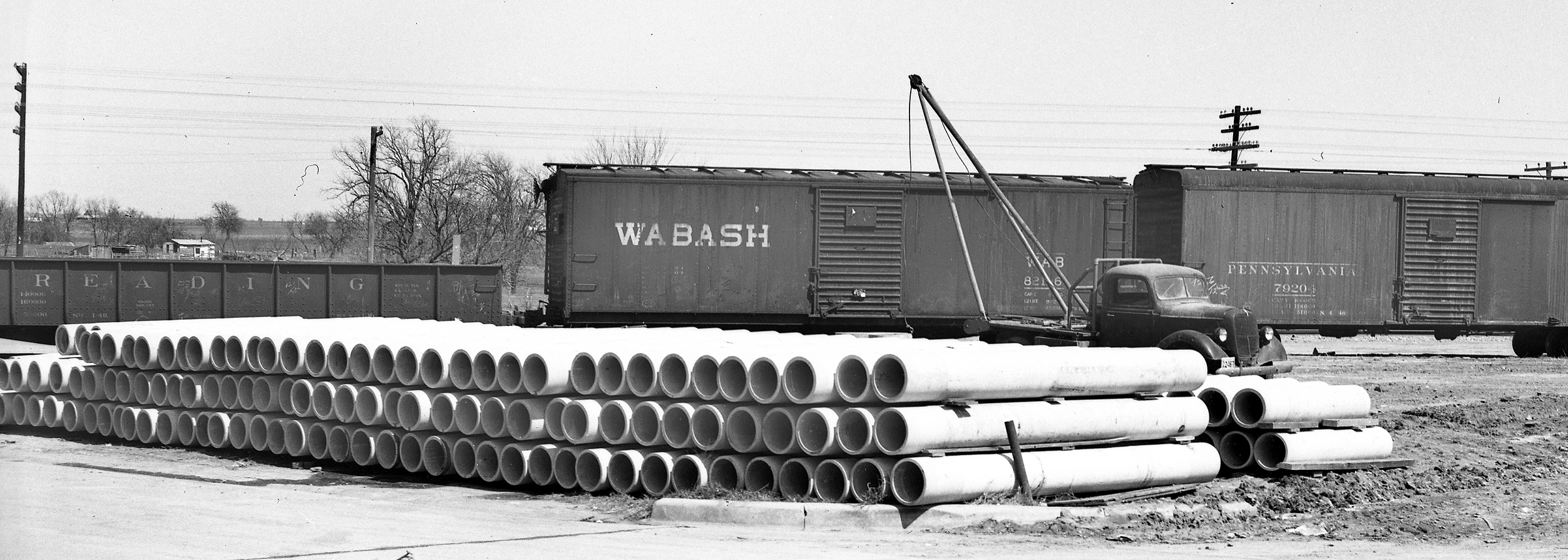
on the hill west of Coleman. In March 1948,
the first load of 1,600 feet of 12 inch
Transite type pipe, being of asbestos-cement
construction, began to arrive in Coleman.
First load of Transite pipe for pipeline from
lake to filtration plant, 1948
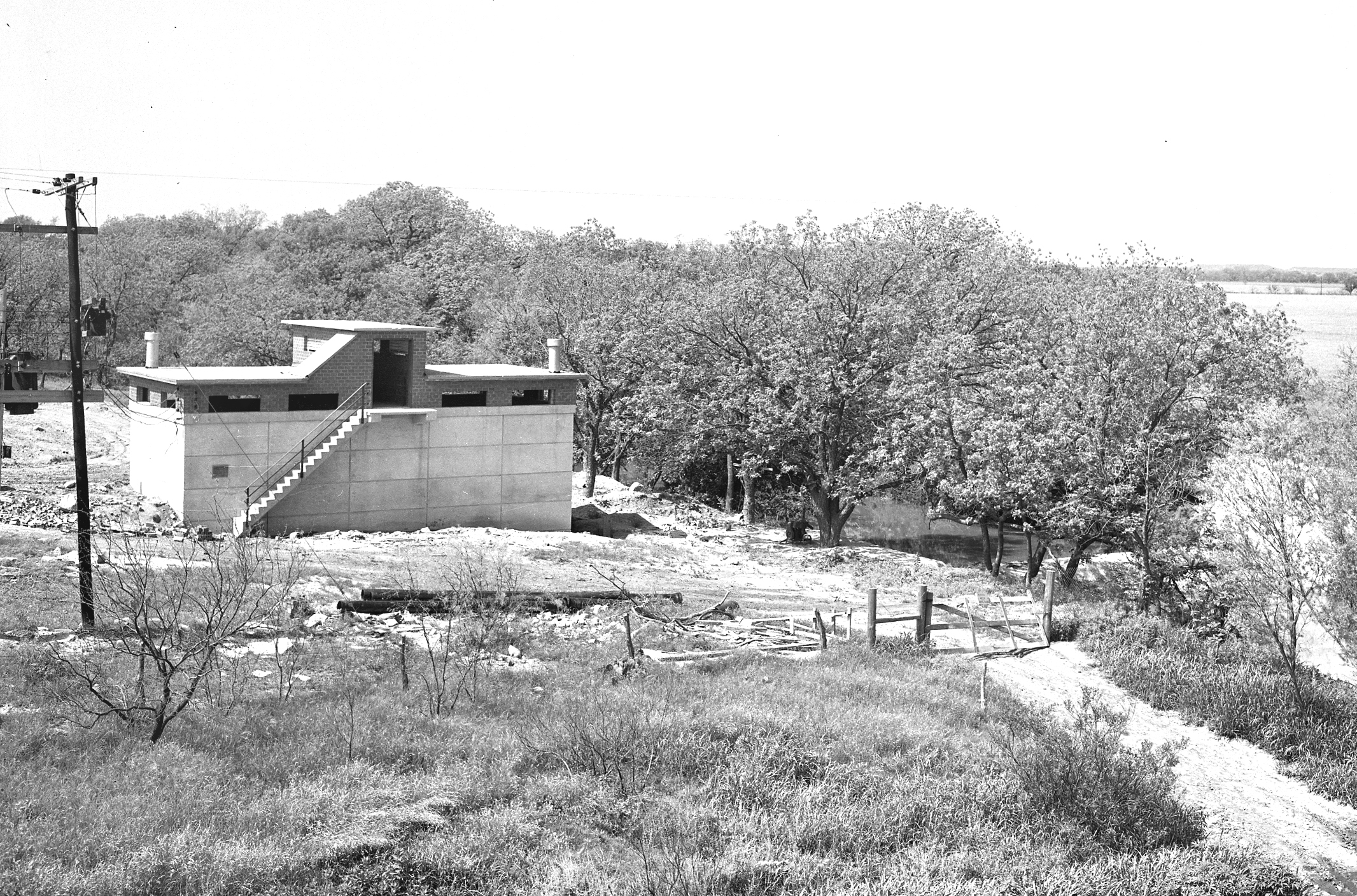
Pump station between lakd and filtration plant,
1949
It was used to connect the filter plant with
the pump station on Hords Creek, near the
swimming pool, and would require 9,300 feet
of pipe. The pump station (above
right, Dunlap), located at the east terminus
of the 14 inch pipeline from Hords creek,
picked up the incoming water and moved it on
to the filtration plant. The low level
dam, a supplemental water source is a few
feet west of the station.
In July 1948, a special election
was called at which time, qualified voters
voted on a $100,000 tax bond issue, the
money from which would be used to complete
the pipe line to the new lake. At the
same time the question of transferring the
$60,000 memorial fund (bonds voted for the
American Legion war memorial) to the water
use was also voted on. This would add
$160,000 to the $350,000 previously voted
for water works improvement. The
special bond election was passed by only 1
vote with 301 for and 300 against. The
vote on the memorial fund transfer passed
with 313 for and 276 against. City
officials indicated they might construct a
low water dam in fear that the pipe might be
slow in arriving, and that it might be the
following fall before the entire line would
be completed. Hauling water was
costing the city $15,000 per month, and
saving two week’s shipping would pay for the
dam. In October 1948, the Coleman city
council voted to use concrete pipe rather
than transite pipe, due to the difference of
about $25,000 in the cost of the 2,900 feet
pipeline.
In April 1949, the new lake gained
about two and a half feet of water, bringing
the level just under one inch of the city’s
gate. Construction on the pipeline
from the lake to the filtration plant was
begun in May 1949, as much of the pipe had
been received. In 1951, the lake
filled to within four feet of its flood
control point. In March 1948, the
Coleman Chamber of Commerce attempted to
persuade lake officials to name the new
reservoir, Lake Coleman, rather than Hords
Creek Lake, without success. In fact,
the new lake was being referred to as Lake
Coleman in the newspapers. If that had
happened, what would Lake Coleman now be
called?
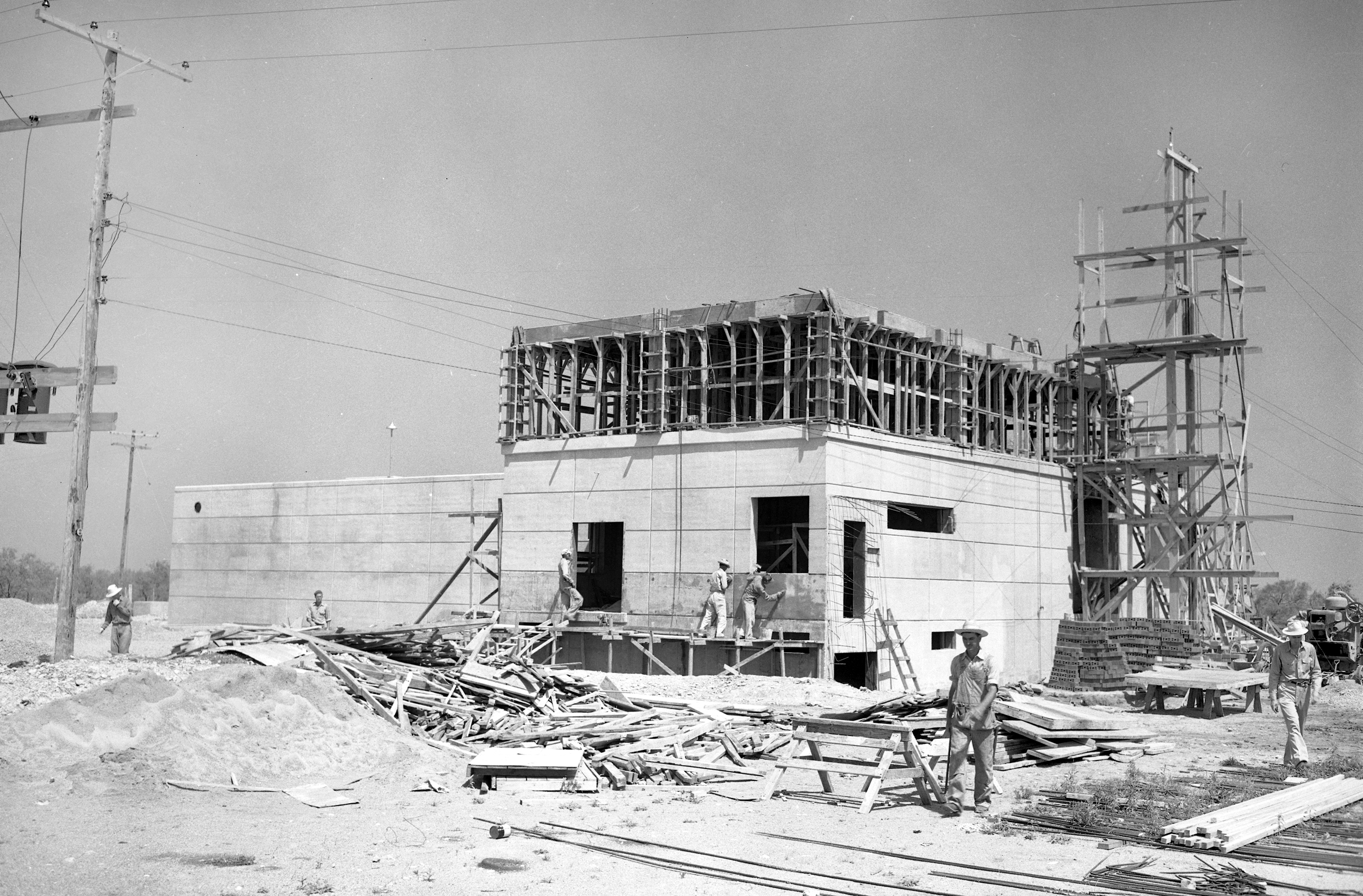
The city’s new filtration plant,
being constructed in 1948 was located on the
hill, just west of town. With its
installation, water from the low level dam
near the pumping station was picked up and
moved into the plant and into the reservoir,
increasing the potential water supply
considerably. In November 1950,
Coleman city officials were giving
consideration to the adding of another steel
reservoir on the hill west of town.
The State Health Department had urged
Coleman to cover the old rock reservoir, on
top of the hill, for some time.
Officials believe they could buy another
steel reservoir as cheaply as they could
cover the old rock reservoir.
Building of Coleman water filtration plant, 1949
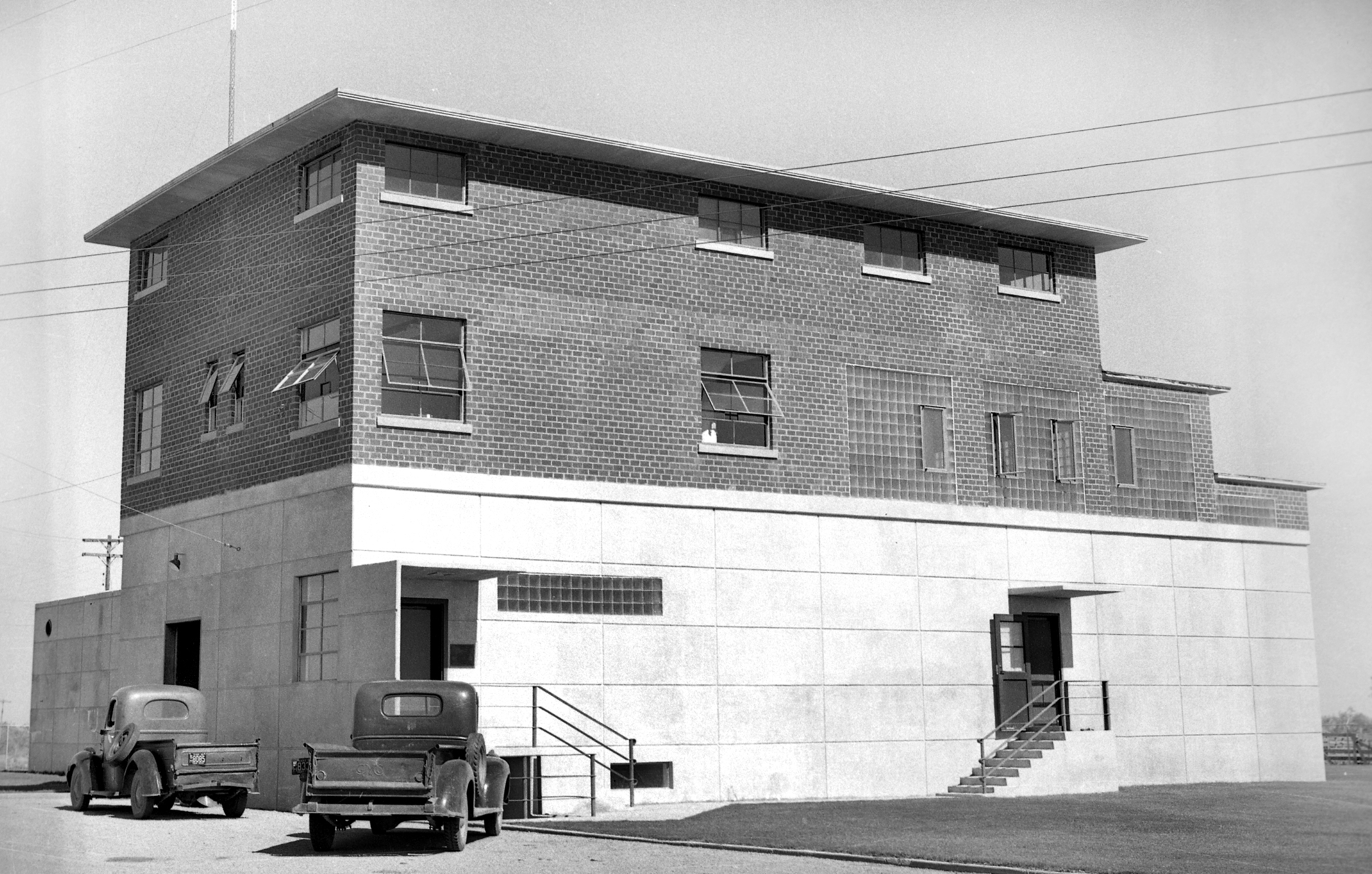
Water filtration plant, 1952
In 1952, the plant was picked as Texas’ most
attractive filtration plant. In the
summer, it operated at its peak, when every
day required a million gallons or more of
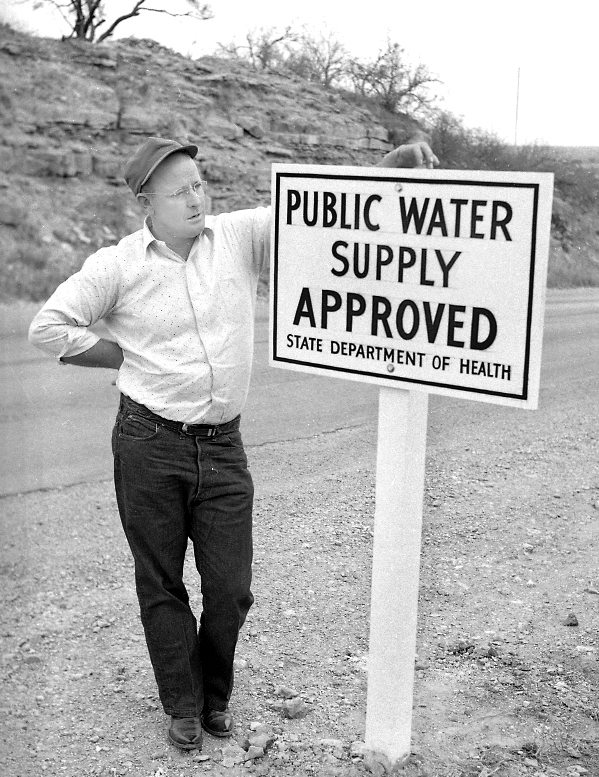
water. The plant superintendent at that time
was Carlos “Red” Koenig. The crew at that
time included Lucien Love and Chester
McDaniel, both water plant specialists with
“B” licenses under state regulations.
Koenig had an “A” license, one of two in the
city’s personnel at that time. Water
came into the plant from Hords Creek Lake
west of town through an eight mile pipe line
with a gravity flow of 1,100,000 gallons a
day, an amount that was often accelerated by
pumps. The water entered an aerator
for treatment that advanced it several
stages towards being pure, and then went
into a mixing chamber where lime, alum and
chlorine were mixed in and any other
chemicals that conditions may require can be
added. After it was treated, the water
went into settling basins for a period when
organic matter can settle to the
bottom. After this it went through the
filter, a sand and gravel arrangement, that
brings the water out pure and sparkling, to
enter a reservoir that feeds into the city
lines. Capacity for the plant was two
million gallons a day, a limit that had not
been approached at that time. The
average daily use in 1952 was 886,000
gallons. City reservoirs kept a safe
margin of water in reserve, in the event a
plant shutdown should ever become
necessary. Tests were regularly
underway over the city to assure that water
came to the consumer at its proper
purity. Ten samples a month were sent
to a state health department laboratory at
Brownwood for bacteriological analysis.
Red Koenig, water plant superintendent, 1952
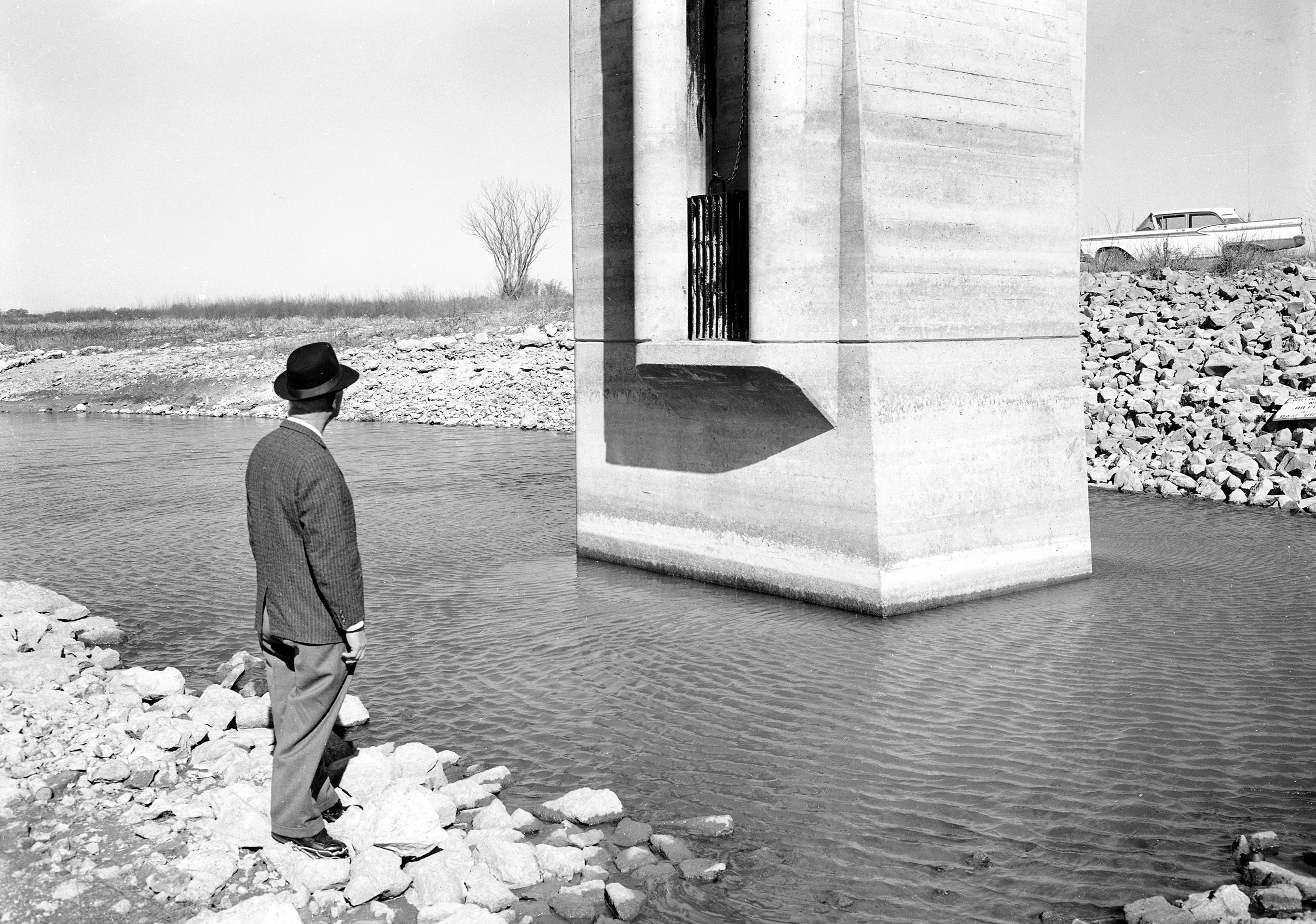
Lad at low level, March 1963
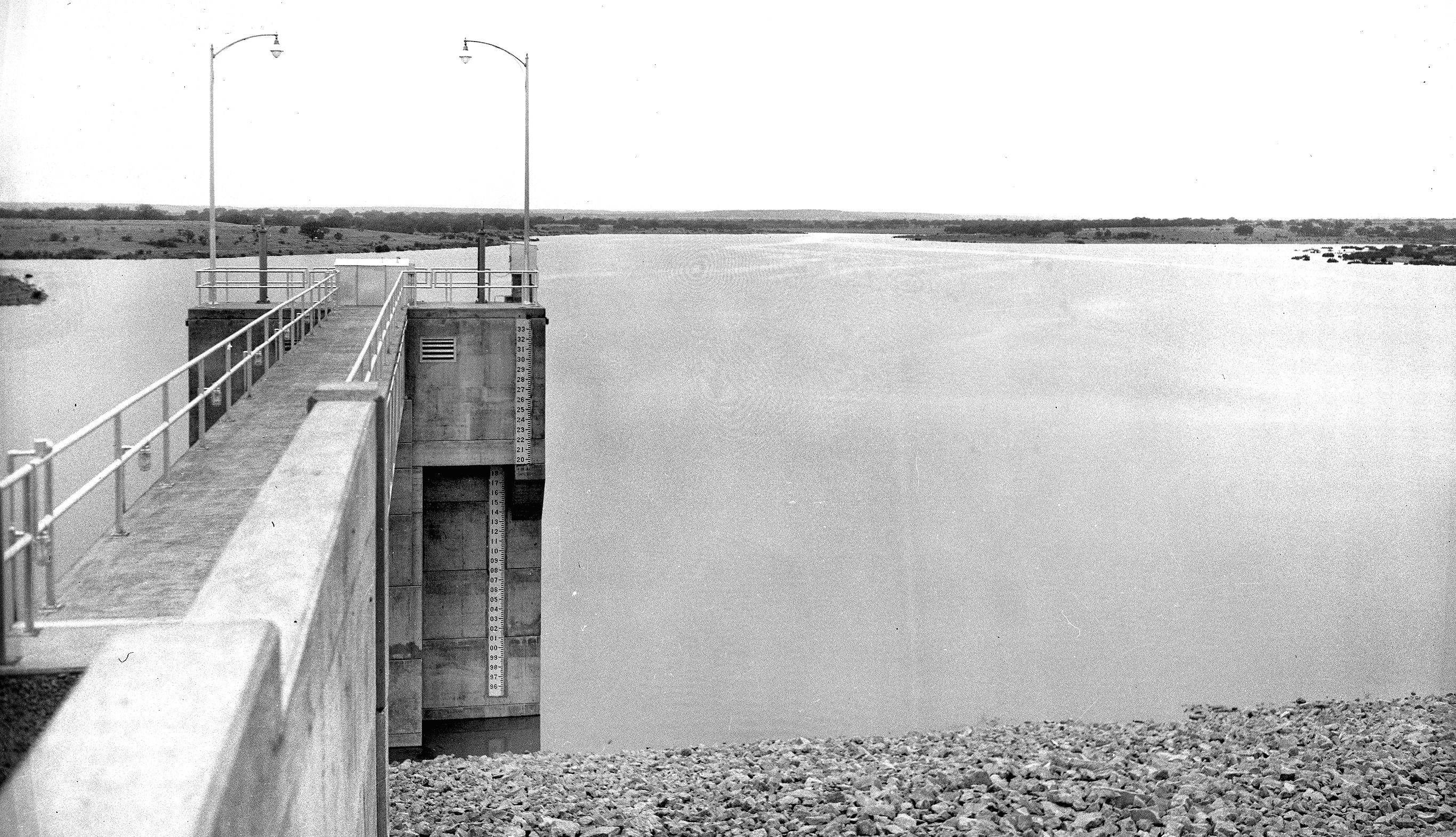
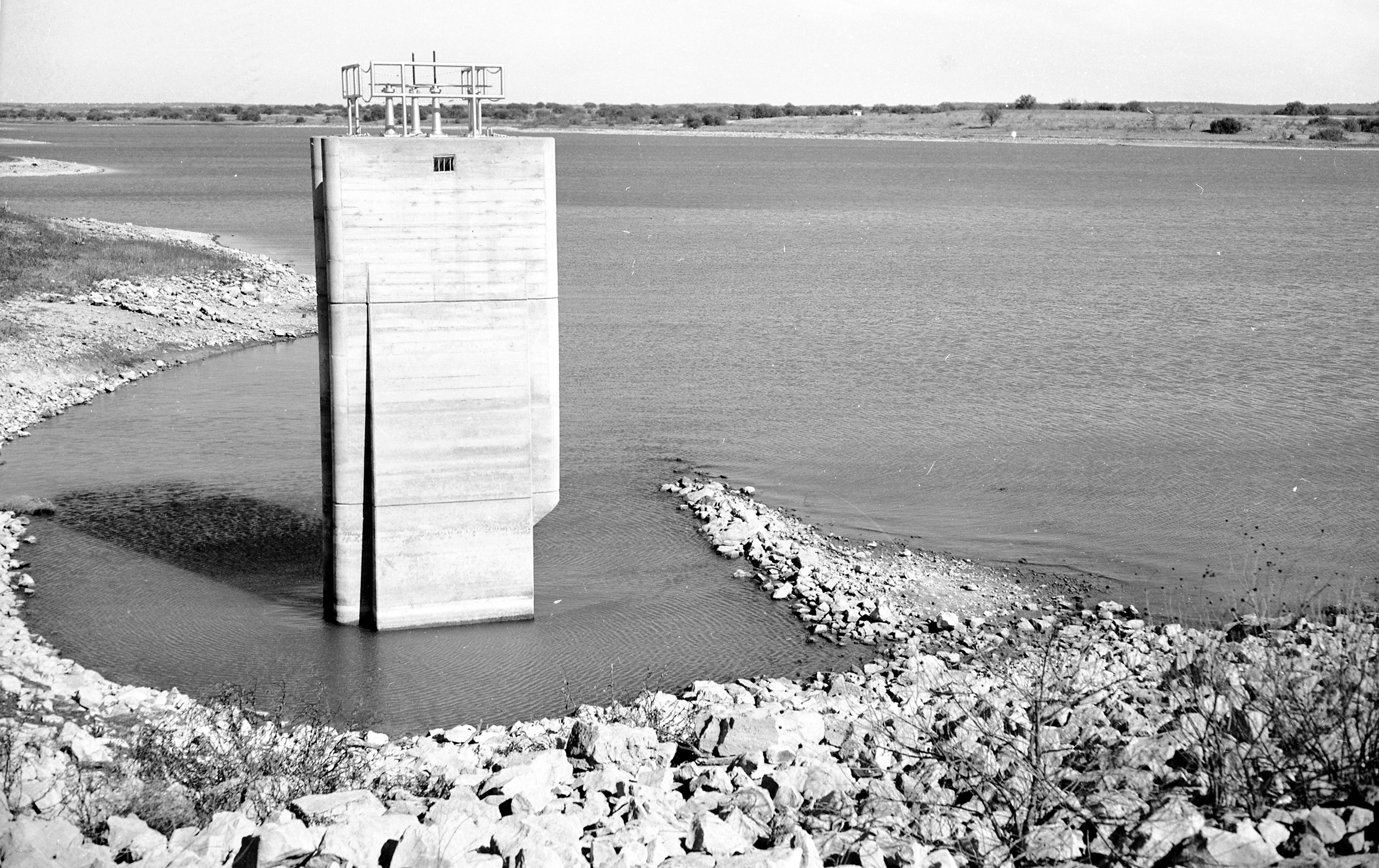
Walter Garland, inspecting intake tower, 1963
Hords Creek Lake had its up and downs in
water level. In March 1963, Hords Creek Lake
(above center, Capps) was its lowest level
since filling, but Lake Scarborough was
nearly full. Both lakes were being used as
the water supply for the city of Coleman at
the time, and the two had a two year supply
of water at the time. The city’s intake
tower at Hords Creek Lake was being
inspected by City Manager Walter Garland
(above right, Capps) at the time. The low
level of the water on the tower indicated
that it might became necessary to build a
temporary dike to the left and pump water in
the basin around the tower in order to keep
the water at the level necessary for proper
pressure on the gravity-glow line.
In February 1975 a City-County
communications system, which was part of the
area network was installed in Coleman. It
was provided locally by a grant from the
Criminal Justice Department. There were two
stations here, one at the Sheriff’s office
and one at the City Police office. The 260
foot tower for the system was located at the
City Filtration Plant.