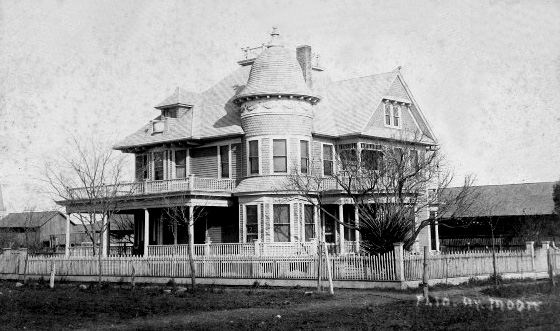
 (Moore Studio photograph owned by Ralph Terry) A. D. Dunn Residence -
about 1908
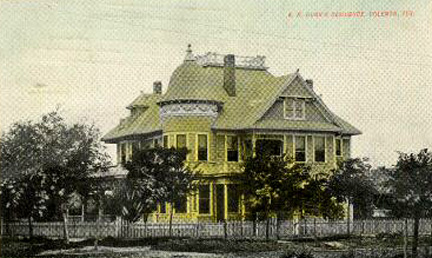 A. D. Dunn Residence -
about 1910
from
a post card dated 1911 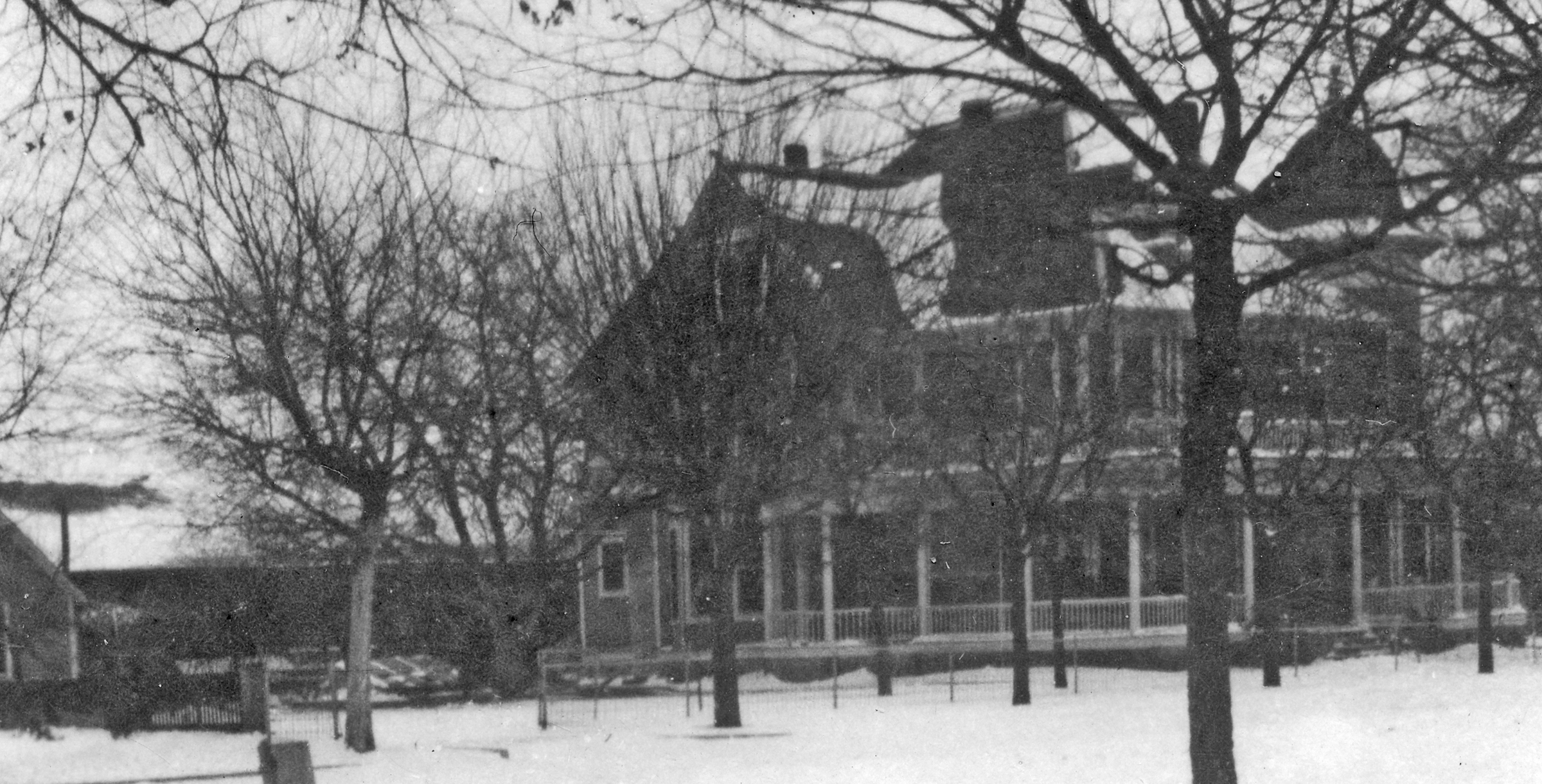
West and
south sides of the A. D. Dunn Home in the snow,
taken from the Bowen home at 316 West Pecan
Street, date unknown. ..............................................................................................................
..............................................................................................................
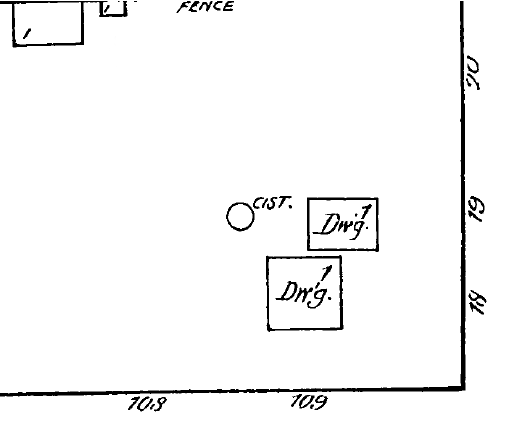
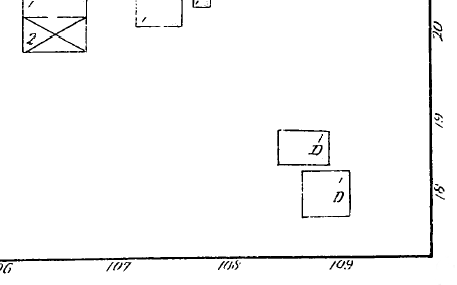
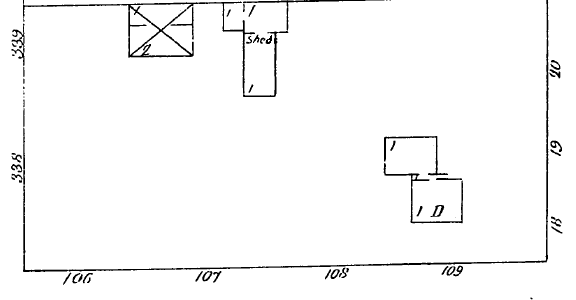
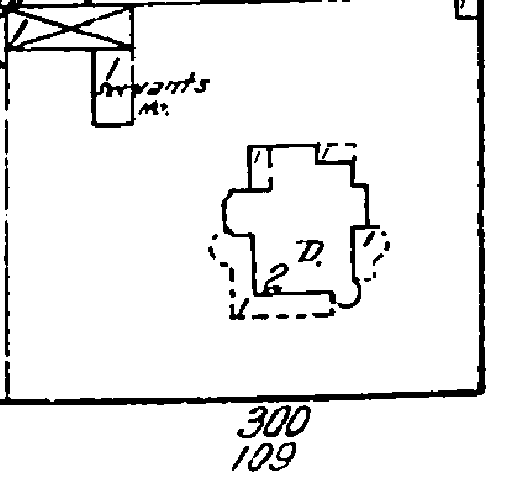
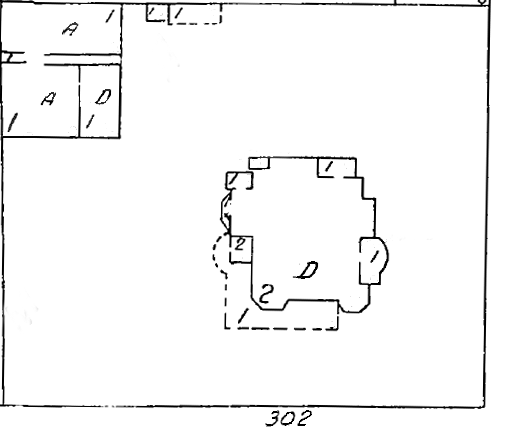
Looking Backward (Written for the Coleman Chronicle and Democrat-Voice Newspaper - June 11, 2018) by Ralph Terry One of Coleman’s oldest residential landmarks, the old Dunn home was located at 302 W. Pecan Street. The lot where the large, picturesque three story frame structure was located covered a quarter of a block. The huge house was built in 1902 by Augustus D. Dunn, pioneer Coleman resident and prominent early day merchant, and his wife Ellen. The Dunns had no children, but the residence was a gathering place for Coleman youngsters. Dunn died in 1918. Later, it was sold to Ben A. and Mathilde Pessels. Pessels came to Coleman in 1903 and purchased the dry goods store of Louis Litt. He sold the dry goods store to Hemphill-Robertson in 1928. After his death in 1948, the old house was sold by Mrs. Pessels to the Powell-Cavanagh Truck and Tractor Company, who kept it as residential property until 1953, but removed the house and converted it to a modern parking lot, surfaced with asphalt paving. Plans at the time were to use it for monthly contact parking, but soon after it was used as an implement parking lot for Powell-Cavanagh. Shown is the Dunn home, which later became the Pessels home about 1915. The small dwelling marked with a “D,” with automobile sheds to the west and north, was the living quarters of Singleton Adams when he worked for the Pessels family.
Back in the early part of the 1900s, most wealthy families had one or more servants, housekeepers and cooks. One of the aspects of these houses of the wealthy class was usually a small house behind the house where these servants usually lived. Like dry goods merchants, these working people also came to Coleman in hopes of finding a better way of life. While looking for some other information about Coleman, I found an interesting article from the April 23, 1931 edition of the Coleman Democrat-Voice about one of these people who helped make Coleman what it is today.
“Singleton Adams Gets Government Check for $288.67. Will Receive $40 Per Month Pension Hereafter. --- Singleton Adams, 80 year old negro who has been a cook at the B. A. Pessels home in this city for the past eleven years, was all smiles the other day when he opened a United States Treasury Department envelope and pulled therefrom a check for $288.67. It represented payment of a $40 per month pension from August 20, 1930, to April 1 of this year. And that is not all. He will receive $40 each and every month hereafter as long as he lives. The smile broadened as the happy old darkey showed the check to friends. It will enable him to live in independent comfort in the evening of his life.
“The white folks amuse me,” the old darkey said to a newspaper reporter. “Some of them want to know if I am going to get drunk and celebrate and others ask what kind of an automobile I am going to buy. I don’t want to get drunk, and don’t want a car. I am going to have my teeth fixed and buy me some glasses I can read by.”
“Adams has no recollection of his birth. He was born in slavery at Frederick City, Maryland. After emancipation he was an assistant chef at the Maryland Deaf and Dumb Institute. From there he went to Niagara Falls, working his way, on a sightseeing trip, and landed at Pittsburgh, Pennsylvania, where a United States recruiting office attracted his attention and again aroused his desire for adventure and more sights. He enlisted for services in Indian wars and was a private in Troop F, United States Calvary.
“After Adams enlisted for a period of five years he was sent with his company to St. Louis for training. From St. Louis the company was moved to Austin by train and from Austin to old Fort Concho overland in wagons. Old Fort Concho, now San Angelo, was a frontier village with barracks, a few dobie houses, gambling dens and numerous saloons with dirt floors.
“What was your favorite drink in those days? Adams was asked. “They all sold for 25 cents and my favorite, generally speaking, was the one that could be fixed up and served the quickest.”
“Adam lost his discharge certificate many years ago. “I did not think so very much of it,” he said, “because as long as I was able to work and get by I had no desire for the government to take care of me.” The old negro, however, is now in possession of a certificate issued in lieu of the one lost or destroyed. It shows that he enlisted April 13, 1875, in Pittsburgh, Pennsylvania, and was honorably discharged at Fort Stockton, April 13, 1880, by reason of expiration of service.
“After his discharge Adams was employed in many of the older towns in west Texas as chef in hotels, but was never employed in a private family until he came to Coleman, except for short times he worked for J. D. Suggs of San Angelo and Frank Wilkes, a Llano lawyer.
“It was while he was in the employ of Mr. Wilkes that he had many of his most thrilling experiences, he said, after leaving the service. His principal duty was to drive four lawyers over what was then a judicial district. The lawyers, as he remembers them, were Judge Blackburn of Burnett, Mr. Wilkes of Llano, Col. Miller and a Mr. Lessing of San Saba, and they visited Mason, Fredericksburg, Burnet, San Saba, San Angelo, Paint Rock, Coleman, Ballinger, Brownwood, Junction and Lampasas.
“ “The lawyers in them days,” Adams said, were not burdened with books. Four were all they had. One of my duties was to mix them toddies every morning when courts were in session and then when courts would adjourn … it was something else.”
“The old man has a fairly good memory. It was due to this fact that he was able to collect information about dates and people that enabled him to prove his claim for a pension and secure a discharge certificate. He remembers the thrilling experiences of his days at Fort Concho and many fights they had with Choctaw, Comanche and Sioux Indians. Colonel Benjamin H. Grayson was in charge of the station at Fort Concho and nearly all of the enlisted men were negroes, some of them West Point graduates. Colonel Shafter was in charge of the 25th Infantry at Fort Duncan, Oklahoma.
“ “Most of the bad Indian raids,” Adams said, “would happen on moonlight nights when the tribes would come from the Mexican border and Lawton, Oklahoma, to rustle cattle and horses and kill citizens. The Indians would never have been so bad had it not been for deserters who would join them and put devilment into their heads.”
“The old negro is courteous and polite, reflecting in every movement the training he received under his Maryland master. When he enters the presence of white people he takes off his hat, smiles and bows profusely and never speaks until spoken to. “I have never goshed white folks,” he said, “but have always had lots of friends among them. When I was cooking for Mr. Suggs he offered to buy me a home and give me a pension if I would just stay with him, but I have never liked this private family business as well as working in hotels.”
“Adams was married at Gatesville, Texas but his wife is dead and he lives alone in the servant house at the Pessels home in this city. He has two sons, but they both live in Kansas City, and the old father is proud to the fact they both served in the World War and saw service in France.”
Singleton
Adams
moved to live near his sons soon after the newspaper
article was written. He died there on August 20,
1936 at the age
of 85. He is buried at the Leavenworth
National Cemetery, Leavenworth near Kansas City,
Kansas. The cemetery is also known as the Old
Solder’s
Cemetery. Singleton Adams was what was
called a Buffalo Soldier. Shown is his
tombstone there. According to the 1920
Coleman census, he was 67 years old, being born about
1853. He married Lizzie Boxdale or Bordale in
Gatesville January 12, 1889. He was the
son of Richard and Mary Ann Adams. ..............................................................................................................
"In 1929, Ben A.
Pessels,
and his wife Mathilde, were residing at 300 West
Pecan Street. Their
telephone number was 115. His business was
located in the Coleman
National Bank building. Rooming at this
address were Carter R.
Chambers; Mack Ledbetter, a traveling salesman; and
Henry M. Rockwell,
manager of Rockwell Bros. and Company, telephone
number 155.." (Coleman
City Directory, 1929 - Hudspeth.) ..............................................................................................................
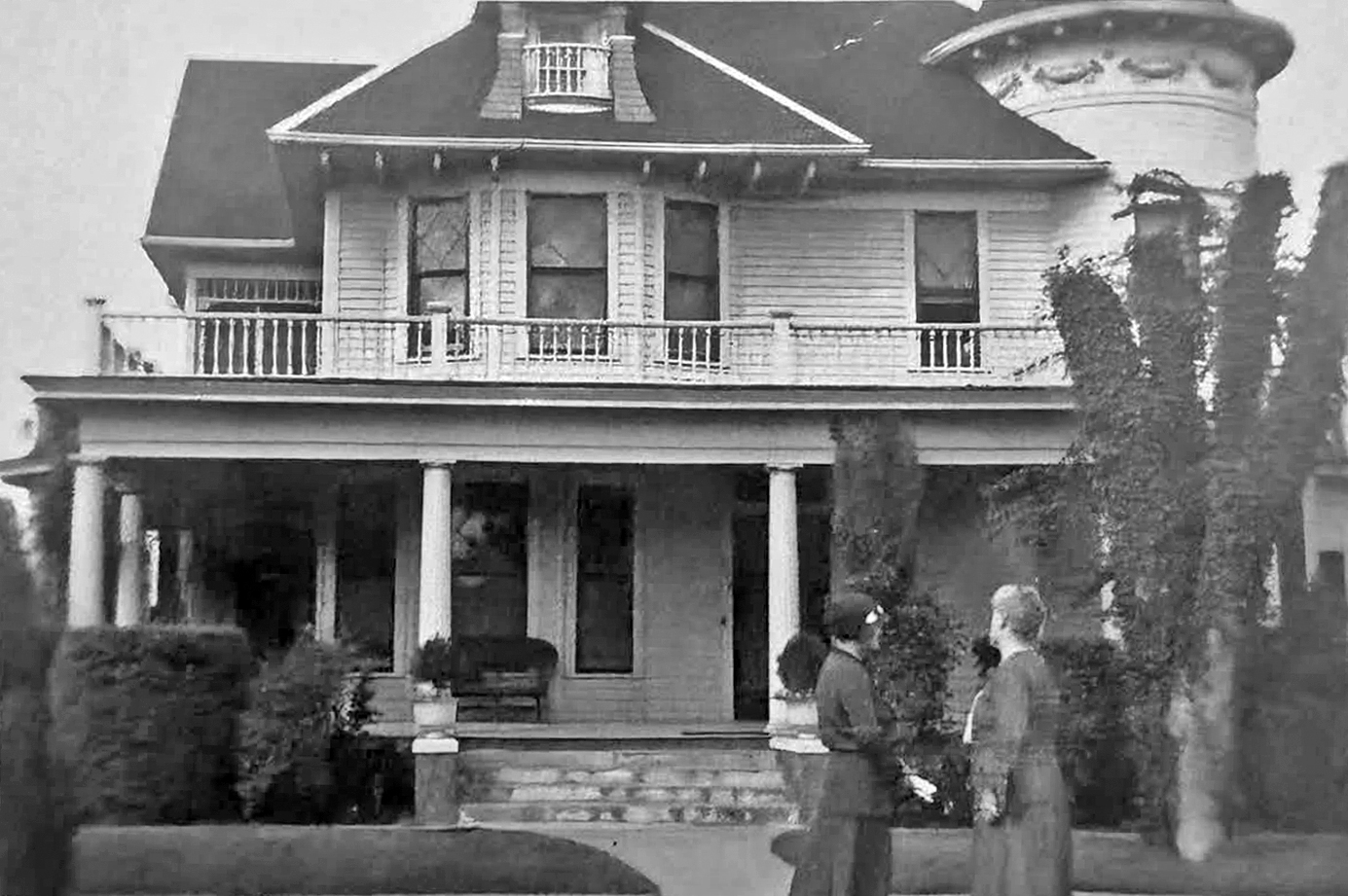 Dunn
- Pessels Home, 1933. (Note: Even though
the home was sold to Ben A. Pessels before
1929, it continued to be referred to as the
Dunn Home.) .............................................................................................................. 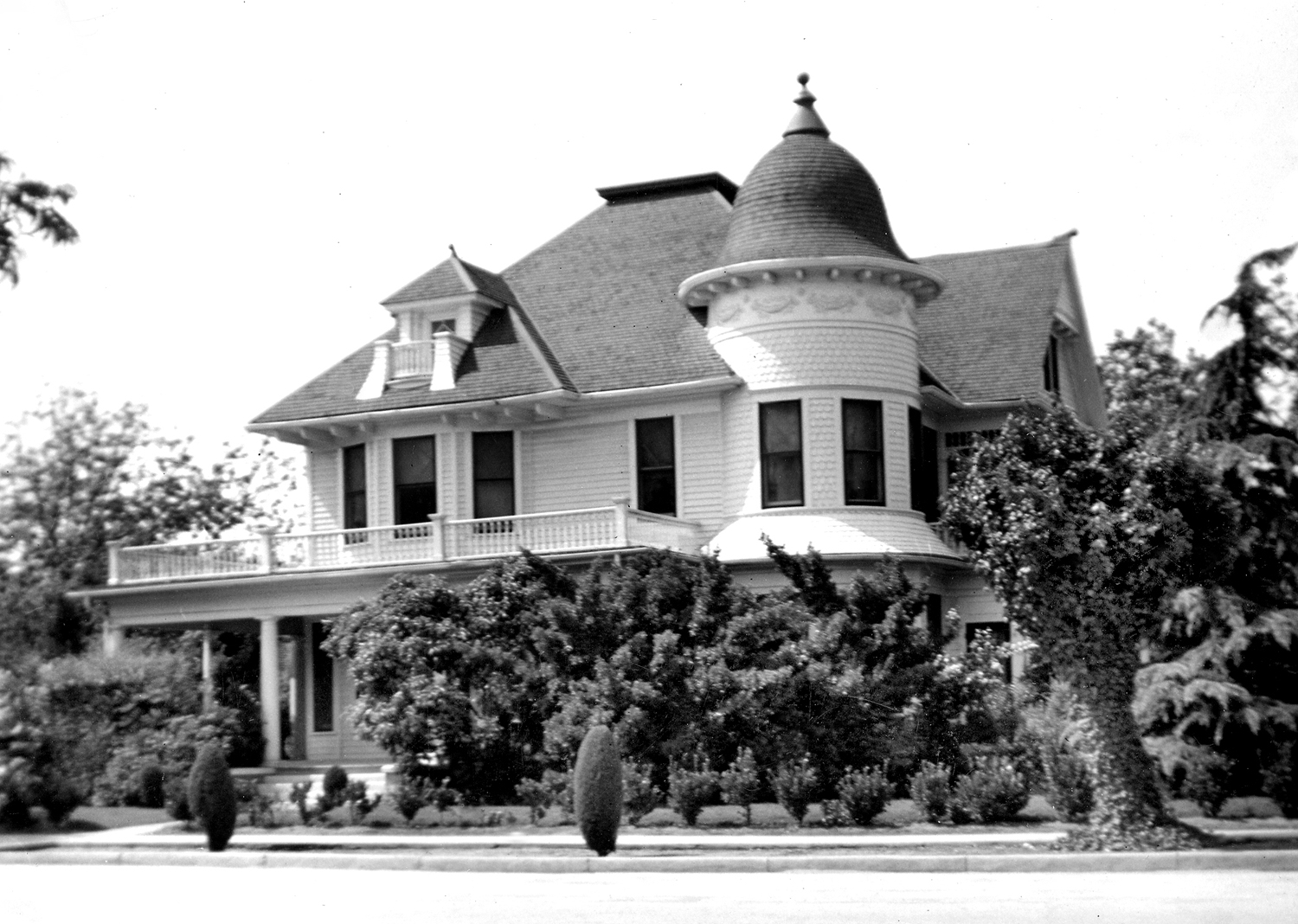 Ben A. and Mathilde Pessels
Home, 1948. ..............................................................................................................
Aerial View
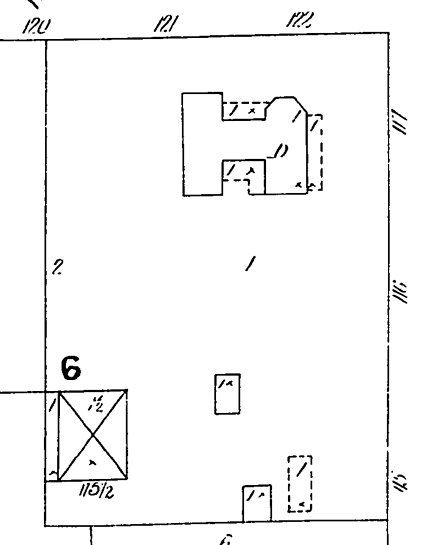
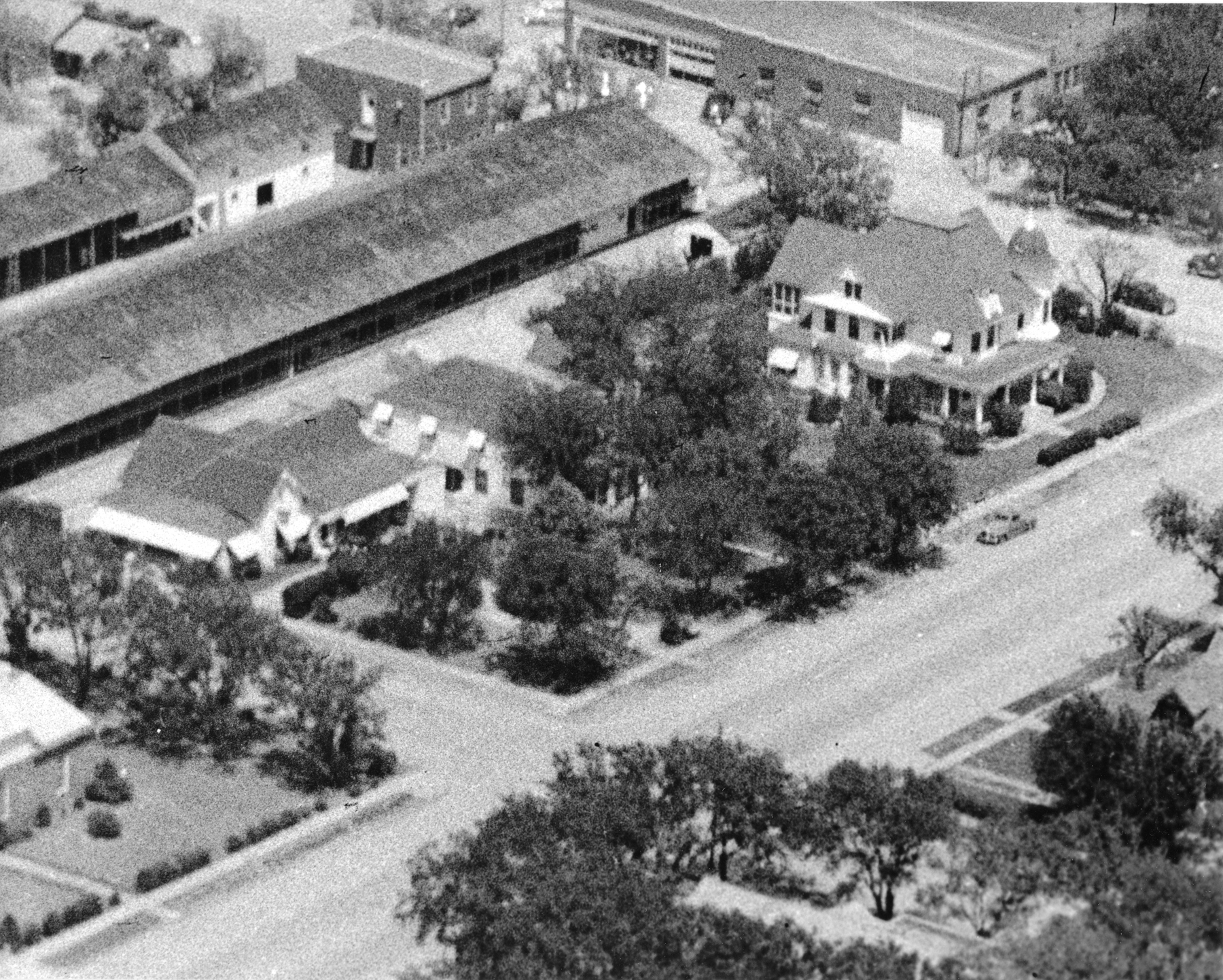
of north side of 300 block of West Pecan Street, 1950. Mr. and Mrs. J. Tom Padgitt lived at 316 West Pecan Street. The house was purchased from Ben A. Pessels in 1924, but was moved back from the street and additions made to the house, and two apartments were added to the northeast corner of the lot. The house was then addressed as 111 South Frio Street and then 117 South Frio Street. The area where the house was originally located was then developed into a yard and garden area, with many trees in the yard. The house and apartments burned in 1974, but the trees recovered. Today the sidewalks where the yard was located are still there, but the trees were removed over the years. An aerial view taken in 1950, shows the Padgitt house to the center left with Frio Street running north to south with the apartments in the center of the picture; the Pessels house to the center right with South Pecos Street running north to south on the east side and West Live Oak Street in front of the two houses, running east to west; the Burton-Lingo Lumber Yard at the top left with Rockwell Brothers Lumber Yard across Live Oak Street; Taylor Motor Company showroom at the top right; at bottom left is the house where the Stevens Funeral Home is now located; Mrs. J. A. Horne home at the bottom right; and the Bowen home is located above right of the Horne home. ......................................................
(photo of house being torn down to be added) GOING DOWN-A Coleman landmark for 50
years, the old "Dunn home" or "Pessels Place" at Pecos
and West Pecan is about wrecked and cleared this
week, to make way for a new parking lot.
Built in 1902 by the late Mr. and Mrs. A. D. Dunn, the house was sold in 1922 to Mr. and Mrs. Ben Pessels, and in 1947 to Powell-Cavanagh Company who are to build a modern parking lot at the site, near the downtown business section. The huge house had 17 rooms, besides accessory rooms. (Coleman Democrat-Voice newspaper, January 6, 1953. Photo by Hugh Capps). ...............................................................
The old Dunn home was torn down in the early 1950's to make way for an implement lot for the Powell-Cavanugh Company. This lot was later divided, creating 300 West Pecan Street and 306 West Pecan Street. The office of the Coleman Production Credit Association was built at 300 West Pecan Street. Campbell's Pharmacy was built at 306 West Pecan Street. |